Blogs
Vietnam Faculty-Led Global Immersion Programmes: Culture, Business & Experiential Learning
For over three decades, we’ve had the privilege of creating meaningful travel experiences that inspire learning, foster connections and deliver lasting impact.


November 25, 2026
Summary
A country is best understood not just through its landmarks, but through its people, everyday life, business environment and the stories that have shaped its identity.
For university students, experiencing a country with a culture and way of life different from their own can be an education in itself. Vietnam offers precisely this opportunity. A fascinating blend of history, cultural traditions, economic development and contemporary urban life makes it an interesting destination for universities looking to introduce students to a different side of Southeast Asia.
For students from the US, UK, Europe and other Western countries, Vietnam offers a perspective that goes beyond what they may have encountered through textbooks, news or popular travel media. It is an opportunity to experience a society where centuries-old traditions coexist with modern ambitions, where local businesses operate alongside international corporations, and where the pace of economic transformation is visible in everyday life.
A well-designed 10–12 day faculty-led global immersion programme in Vietnam can bring these different dimensions together, combining academic engagement, industry exposure, cultural exchange and experiences that students are likely to remember long after returning home.
- 1. Exploring Vietnam's Cities Through a Global Immersion Programme
- 2. Cultural Exchange and Experiential Learning in Vietnam
- 3. The Role of Faculty in International Academic Immersion
- 4. Planning a 10–12 Day Faculty-Led Programme in Vietnam
- 5. What Students Gain from International Experiential Learning
- 6. How Vesna Tours Organises Faculty-Led Global Immersion Programmes
- 7. Taking Home More Than Memories
- 8. Planning a Faculty-Led Global Immersion Programme in Vietnam?
Exploring Vietnam's Cities Through a Global Immersion Programme
One of Vietnam's greatest strengths as an educational immersion destination is the diversity of experiences its cities offer. Each has a distinct character, and together they provide an interesting introduction to the country's history, economy and cultural landscape.
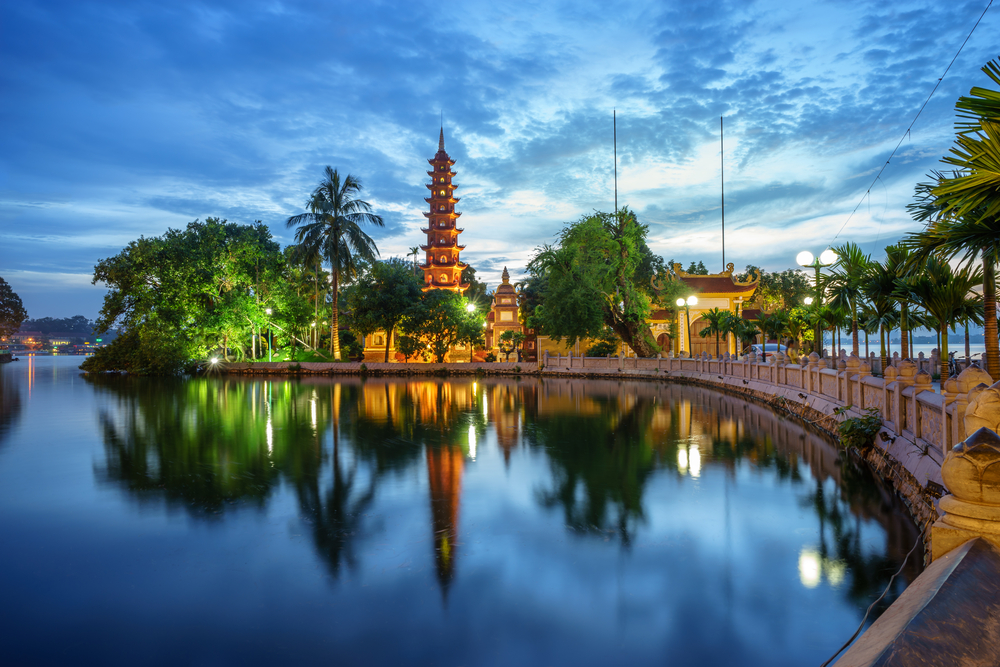
Hanoi – Where History Meets Contemporary Vietnam
NORTH VIETNAM
Hanoi, the capital, is an excellent starting point for understanding Vietnam's cultural and political identity.
Its historic Old Quarter, lakeside neighbourhoods, traditional markets, temples and French-influenced
architecture offer a fascinating introduction to the country's past and present. For students, the city
provides opportunities to explore Vietnamese history, public institutions, cultural preservation and the
country's evolving social landscape. University interactions, discussions with local experts, traditional craft
experiences and food walks can add depth to the visit.
Ho Chi Minh City – Understanding a Growing Economy
SOUTH VIETNAM
If Hanoi offers a window into Vietnam's history, Ho Chi Minh City offers a closer look at its economic
ambitions. Formerly known as Saigon, this energetic metropolis is a major commercial centre, with a
growing business ecosystem, modern infrastructure and a strong entrepreneurial culture. Business and
management students can benefit from exposure to local enterprises, start-ups, manufacturing and
international trade. Visits to business districts, conversations with entrepreneurs and interactions with
industry professionals can help bring discussions around emerging markets and global supply chains into perspective. The city's street culture, contemporary cafés, local food scene and historic neighbourhoods
also provide plenty of opportunities for informal cultural exploration.
Da Nang – A Modern City with a Coastal Identity
CENTRAL VIETNAM
Da Nang presents a different side of the country. Known for its coastline, modern bridges, expanding
urban landscape and growing tourism sector, it offers an interesting setting to explore urban development,
infrastructure, hospitality and sustainable tourism. Its location also makes it a convenient base for
exploring some of central Vietnam's most distinctive cultural destinations. For students, Da Nang can
provide perspectives on how a developing city balances economic growth, tourism, environmental
considerations and quality of life.
Hoi An – A Living Expression of Vietnamese Heritage
CENTRAL VIETNAM
A visit to Hoi An offers a welcome change of pace. Its historic streets, traditional architecture, lantern-lit
evenings, riverside setting and vibrant craft traditions make it one of Vietnam's most distinctive cultural
destinations. However, there is more to Hoi An than its picturesque appearance. Students can learn about
traditional craftsmanship, local entrepreneurship, heritage conservation and the relationship between
tourism and community livelihoods. Experiences such as cooking with local hosts, visiting artisan
workshops and exploring nearby villages can offer a more personal understanding of Vietnamese culture.
Hue – Exploring the Country's Imperial Past
CENTRAL VIETNAM
For students interested in history, architecture and cultural heritage, Hue offers an entirely different
dimension. The former imperial capital is known for its Imperial City, royal tombs, historic monuments and
the Perfume River. It provides an opportunity to explore Vietnam's dynastic history, traditional arts,
architecture and the preservation of cultural identity. Faculty-led discussions and guided heritage
explorations can make the city's historical significance more engaging.
Can Tho and the Mekong Delta – Life Along the River
SOUTH VIETNAM
To understand Vietnam beyond its urban centres, the Mekong Delta offers a particularly rewarding
experience. Can Tho, one of the region's principal urban centres, provides access to a landscape shaped
by rivers, agriculture, fishing communities and floating markets. Students can gain insights into rural
economies, agricultural practices, food production, local livelihoods and environmental challenges. Visits
to local communities, orchard farms and river-based markets can provide an understanding of how
geography influences everyday life and economic activity. For students interested in sustainability,
development studies and social sciences, this can be one of the most valuable parts of the programme.
Cultural Exchange and Experiential Learning in Vietnam
The real distinction between a conventional educational tour and a global immersion programme lies in the nature of the experiences.
A visit to a local market becomes more meaningful when students understand the role it plays in the community. A meeting with an entrepreneur becomes more valuable when students can ask questions about the challenges of operating a business in an emerging economy. An afternoon with local artisans can offer insights into cultural preservation, livelihoods and traditional knowledge.
These are the experiences that bring a destination to life.
For Western students, particularly those visiting Vietnam for the first time, opportunities to interact with local university students, participate in cooking sessions, explore neighbourhoods with local guides, engage with community initiatives and understand regional customs can be especially enriching.
The aim is to encourage genuine cultural exchange rather than simply expose students to a collection of attractions.
The Role of Faculty in International Academic Immersion
Faculty leadership is what gives an immersion programme its academic direction. Rather than treating each visit as an isolated experience, faculty members can connect destination-based interactions with subjects and concepts students have explored in the classroom.
A discussion with a local entrepreneur, for instance, can become an opportunity to examine emerging market dynamics. A visit to a traditional community can encourage conversations around social structures and cultural preservation, while interactions with Vietnamese university students can introduce different perspectives on education, careers and contemporary society.
Faculty-led discussions, collaborative workshops, reflective sessions and student presentations can further strengthen the learning experience.
This combination of academic guidance and first-hand exposure makes short-term international programmes particularly valuable.
Planning a 10–12 Day Faculty-Led Programme in Vietnam
A shorter international programme requires thoughtful destination selection and a clear academic purpose. Rather than attempting to cover every major attraction, universities can focus on two or three locations that complement one another.
A programme could bring together:
- Academic interactions with Vietnamese universities and local faculty.
- Business visits and discussions with entrepreneurs and industry professionals.
- Cultural workshops, traditional crafts and local culinary experiences.
- Heritage explorations and conversations around history and society.
- Community interactions and exposure to local livelihoods.
- Opportunities for students to exchange ideas, reflect and explore.
The choice of cities and experiences should depend on the academic discipline, faculty interests and learning objectives. A business school delegation, for instance, may prioritise Hanoi and Ho Chi Minh City, while a programme focused on culture, heritage and sustainability may place greater emphasis on central Vietnam and the Mekong Delta.
Vietnam's regional diversity also makes timing an important consideration. Weather conditions vary across the north, central and southern regions, influencing the suitability of particular destinations and outdoor experiences. Planning around the university's academic calendar while considering local seasonal conditions can make a considerable difference to the overall programme.
What Students Gain from International Experiential Learning
The value of a global immersion programme is not measured simply by the number of places visited or sessions attended. It is also reflected in how students think, interact and respond to the world around them.
Exposure to unfamiliar cultural settings encourages students to develop intercultural communication skills, adaptability and greater cultural awareness. Interactions with local entrepreneurs and university students offer new perspectives on international business, education and society. Experiences within local communities can challenge assumptions and encourage a more nuanced understanding of global differences.
These encounters can also lead to friendships, professional connections and an interest in exploring other parts of the world.
For universities, such programmes provide an opportunity to bring international perspectives into the student experience without requiring a full semester or year abroad.
How Vesna Tours Organises Faculty-Led Global Immersion Programmes
Creating an enriching global immersion programme involves much more than arranging flights, hotels and local transportation. It requires an understanding of the university's academic objectives, access to relevant local institutions and the ability to identify experiences that genuinely add value.
At Vesna Tours, we work with universities and faculty leaders to conceptualise and organise customised international immersion programmes, bringing together the academic, cultural and operational elements of each visit.
Our support includes identifying suitable university and institutional partners, coordinating industry visits and expert interactions, curating authentic cultural experiences, arranging local workshops and community engagements, and managing accommodation, transportation and on-ground logistics.
We also understand that each delegation has different requirements. Our role is to work with faculty leaders to develop a programme that reflects the subject being studied, the profile of the students and the intended learning outcomes.
With the right local partnerships and careful planning, a 10–12 day visit can become a rewarding combination of academic engagement, cultural discovery and international exposure.
Taking Home More Than Memories
The most valuable part of travelling to a new country is often what students discover about themselves in the process. Navigating unfamiliar surroundings, meeting people with different perspectives, trying new experiences and questioning familiar assumptions can be transformative.
Vietnam offers an excellent setting for this kind of learning. Its cities, communities, economic landscape and cultural heritage provide a rich backdrop for conversations that extend well beyond the classroom.
At Vesna Tours, we believe that international education should be experienced, not just studied. Through thoughtfully developed faculty-led global immersion programmes, we help universities create opportunities for students to engage with the world, develop a broader outlook and return home with experiences and perspectives that stay with them.
Planning a Faculty-Led Global Immersion Programme in Vietnam?
Whether your university is exploring a business-focused immersion, cultural exchange, industry exposure or an interdisciplinary academic programme, Vesna Tours can help bring the right experiences together.
Connect with our team to explore customised 10–12 day global immersion programmes in Vietnam, designed around your faculty's academic objectives and students' interests.
About the Author

Categories
Recent Posts
Planning a University Delegation Visit to India
Nov 16, 2026