
Summary
India is an important market for international student recruitment, offering foreign universities opportunities to connect with students seeking globally recognised qualifications, international exposure, and career-oriented education. However, successful recruitment requires more than digital advertising. Universities need a well-planned strategy that combines education roadshows, school and college visits, student engagement events, digital marketing, and reliable local coordination. A Destination Management Company (DMC) can help international universities organise multi-city recruitment tours, manage travel and hospitality arrangements, coordinate event logistics, and facilitate on-ground activities. With the right planning and local support, universities can build meaningful connections with Indian students, strengthen their visibility, and create opportunities for long-term academic engagement.
This guide explores how foreign universities can reach prospective students in India and how Vesna Tours can support the coordination of education roadshows, university events, and destination management services.
- 1. Understanding the Indian Student Market
- 2. Organising Education Roadshows Across India
- 3. Building Partnerships with Schools and Colleges
- 4. Creating Engaging Student Recruitment Events
- 5. Combining Digital Marketing with On-Ground Outreach
- 6. Simplifying Travel and Event Logistics
- 7. The Role of a DMC in International Education Recruitment
- 9. Conclusion
- 10. Frequently Asked Questions
Understanding the Indian Student Market
India offers international universities access to a large and diverse student population interested in overseas education. Students explore opportunities across destinations such as the United Kingdom, the United States, Canada, Australia, Germany, and other European countries.
Their interests vary according to academic background, career goals, financial circumstances, and preferred study destinations. Some students prioritise postgraduate programmes and research opportunities, while others seek undergraduate degrees, practical learning experiences, or industry- focused qualifications.
When entering the Indian market, universities should identify their target audience and understand the factors influencing student decisions. These include tuition fees, scholarships, academic reputation, admission requirements, accommodation, student support, and potential career pathways. India's regional diversity also makes targeted outreach important. Universities should select cities and institutions based on their programme offerings, recruitment objectives, and the students they wish to reach.
Organising Education Roadshows Across India
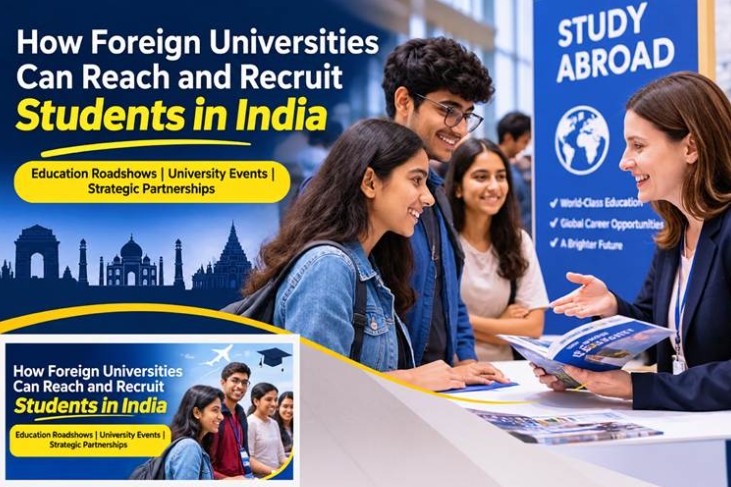
Education roadshows provide foreign universities with an opportunity to present their academic programmes directly to prospective students. These events allow students and parents to interact with university representatives, ask questions, and understand the opportunities available at different institutions.
Universities can organise roadshows in cities such as Delhi, Mumbai, Bengaluru, Hyderabad, Chennai, Pune, and Kolkata, depending on their target audience and budget. A successful education roadshow requires detailed planning, including:
- Selecting appropriate cities and event venues.
- Identifying relevant student communities and educational institutions.
- Scheduling meetings with university representatives and local stakeholders.
- Managing registrations and event promotions.
- Arranging audiovisual equipment, displays, and promotional materials.
- Coordinating transportation and accommodation for visiting delegates.
Well-organised roadshows can help universities increase awareness of their programmes while creating opportunities for direct interaction with students. Working with a local event or destination management partner can simplify the coordination of multiple locations and help university teams focus on recruitment objectives.
Building Partnerships with Schools and Colleges
Schools, colleges, and educational institutions can play an important role in connecting foreign universities with prospective applicants.
University representatives can visit selected institutions to conduct academic presentations, career guidance sessions, and discussions about international study opportunities. These visits allow students to learn about available programmes before making important decisions about their future education.
Universities can also build relationships with school counsellors, college administrators, and academic coordinators who advise students about further education.
Useful activities include university introduction sessions, subject-specific presentations, admission guidance workshops, and discussions about scholarships and international campus life.
These interactions should provide accurate information about entry requirements, application deadlines, programme structures, and available student support services.
Developing long-term institutional relationships can help universities maintain a consistent presence in India and create opportunities for future academic engagement.
Creating Engaging Student Recruitment Events
Students considering international education often have questions that are difficult to resolve through websites or advertisements alone. In-person events provide an opportunity to address these concerns directly.
Foreign universities can organise several types of engagement activities:
- Education fairs: Introduce students to multiple programmes and university representatives.
- Information sessions: Explain admissions, academic options, and campus facilities.
- Career seminars: Discuss academic pathways and relevant professional opportunities.
- Parent engagement sessions: Address concerns about accommodation, costs, student welfare, and practical preparations.
- Networking events: Connect university representatives with educational stakeholders and potential institutional partners.
The event format should reflect the university's objectives and the audience it wants to reach. For example, a postgraduate recruitment session may benefit from detailed discussions about specialisations, research facilities, and entry requirements. An undergraduate event may focus more on programme selection, application procedures, campus life, and financial planning.
Clear communication and relevant presentations help students make informed decisions while building trust in the university.
Combining Digital Marketing with On-Ground Outreach
Digital marketing can help foreign universities reach prospective students before and after their visits to India. However, digital campaigns can be more effective when combined with personal engagement and well-planned events.
Universities can use websites, search campaigns, social media, email newsletters, and online information sessions to generate interest in their recruitment programmes.
A coordinated approach can include three stages.
Before the event: Promote the roadshow, share programme information, and encourage interested students to register.
During the event: Use digital registration forms, QR codes, and information resources to make it easier for attendees to access relevant details.
After the event: Follow up with interested participants, share application guidance, and provide links to official university resources. students to register.
Universities should obtain appropriate consent before collecting and using student contact information for follow-up communications. Combining digital engagement with face-to-face interaction helps create a more connected recruitment experience and enables universities to maintain communication with prospective applicants.
Simplifying Travel and Event Logistics
Organising a university recruitment tour across several Indian cities involves more than scheduling meetings. International delegates may require accommodation, airport transfers, local transportation, venue arrangements, hospitality, and assistance with event schedules. Poor coordination can result in delays, missed appointments, and unnecessary operational challenges. Advance planning is therefore essential for a smooth recruitment programme. Universities should prepare a detailed itinerary covering travel arrangements, event timings, venue locations, contact persons, and contingency plans.
Depending on the agreed scope of services, a local partner can assist with:
- Hotel bookings and accommodation coordination.
- Airport transfers and local transportation.
- Venue selection and event setup.
- Multi-city itineraries and scheduling.
- Hospitality arrangements for visiting university teams.
- Supplier coordination and on-site assistance.
- Cultural experiences and networking programmes.
A centralised coordination process helps university teams manage several activities more efficiently, particularly when representatives are visiting India for the first time.
The Role of a DMC in International Education Recruitment
A Destination Management Company provides local expertise and coordination for travel, hospitality, events, and destination-related requirements. For foreign universities, a DMC can support the operational side of education roadshows, promotional tours, academic visits, conferences, and networking events. This allows university representatives to concentrate on meeting students, presenting programmes, and developing institutional relationships.
Vesna Tours supports destination management and event coordination requirements in India. Depending on the university's needs, its services can help coordinate travel arrangements, hospitality, event logistics, and related on-ground activities. For example, a university planning a recruitment tour across three cities may need assistance with hotel reservations, transportation between venues, delegate schedules, and event arrangements. Coordinating these elements through a structured plan can make the programme easier to manage. The specific requirements will vary according to the event format, audience, schedule, and budget. A tailored approach ensures that logistical arrangements support the university's wider recruitment strategy.
Measuring Recruitment Success
A successful recruitment programme should be evaluated against clear objectives rather than attendance figures alone.
Universities can track several indicators to understand the effectiveness of their outreach activities:
- Number of registrations and event attendees.
- Number of relevant student enquiries.
- Engagement with specific academic programmes.
- Meetings with schools, colleges, and education counsellors.
- Requests for additional information or application guidance.
- Subsequent applications and enrolments, where measurable.
These insights can help universities identify which locations, event formats, and communication channels are most relevant to their target audiences.
Follow-up is equally important. Universities should respond to enquiries promptly, share accurate information, and maintain communication with students who express interest in applying. Reviewing results after each recruitment tour allows institutions to refine future activities and develop a more effective long-term presence in India.
Conclusion
India offers foreign universities valuable opportunities to connect with students seeking international education. Reaching the right audience requires a combination of market understanding, education roadshows, institutional partnerships, student engagement, digital outreach, and efficient event coordination.
By planning targeted activities and providing reliable admissions information, universities can strengthen their visibility and build meaningful relationships with prospective students. Partnering with a Destination Management Company can simplify the logistical aspects of multi-city recruitment programmes, from accommodation and transportation to event coordination and on-ground support.
Vesna Tours can assist international universities with destination management, travel, hospitality, and event-related coordination in India. With the right planning and local support, foreign universities can create well-organised recruitment experiences and connect more effectively with India's next generation of students.
Frequently Asked Questions
1) How can foreign universities reach students in India?
Foreign universities can connect with students through education roadshows, school and college visits, education fairs, digital marketing, information sessions, and institutional partnerships.
2) Which cities are suitable for university roadshows in India?
Delhi, Mumbai, Bengaluru, Hyderabad, Chennai, Pune, and Kolkata are potential locations. The most suitable cities depend on the university's target audience, academic programmes, objectives, and budget.
3) What does a DMC do for international university events?
A DMC can coordinate accommodation, local transportation, venue arrangements, hospitality, event logistics, and multi-city itineraries, depending on the agreed scope of services.
4) Why should universities organise education roadshows?
Education roadshows provide opportunities for direct interaction with prospective students, help explain academic programmes, and allow universities to answer questions about admissions and student life.
5) How can Vesna Tours support foreign universities?
Vesna Tours can help coordinate destination management, travel arrangements, hospitality, and event- related logistics for international universities planning recruitment tours, education roadshows, and promotional programmes in India.